The Santoku is a versatile Japanese kitchen knife known for its balanced feel, compact profile, and broad blade. Its name is often translated as “three virtues,” traditionally referring to its ability to handle slicing, dicing, and chopping with ease. The relatively tall blade provides plenty of knuckle clearance and a generous surface for transferring ingredients, while the shorter length makes it quick and comfortable to maneuver. For many cooks, the Santoku strikes an excellent middle ground between an all-purpose chef’s knife and a more specialized Japanese blade.
While the Santoku shares some characteristics with the Bunka—particularly its compact size and tall blade—the two are distinguished most noticeably by their tips. A Santoku typically has a gently rounded or sheep’s-foot style tip, favoring a smooth rocking and chopping motion, whereas a Bunka has a more pronounced angular tip suited to finer, more precise work. Ultimately, the Santoku’s appeal is its versatility: it is equally at home preparing vegetables, boneless proteins, herbs, and the everyday ingredients that make up most of a home cook’s prep.
Knife details:
Blade length: 6.5”
Heel height: 2.25”
Handle length 5.25”
Steel: 26c3 Carbon
Handles material: African Blackwood and Brass
Grind type: Walkschliff
Edge thickness and hardness: .005” 65 hrc
Edge angle 15 degrees
Weight: 4.8 oz
More About Walkschliff Grind:
The walkschliff grind is a grind that is essentially a double convex grind. Meaning that both the edge and spine are tapered from the middle. This makes the cross section of the knife egg shaped. The reason why i've switched over to the walkschliff grind is
1. Because it adds lateral durability to the knife (including the tip) meaning more durability through hard use.
2. Adds blade stiffness without adding weight
3. In my opinion the best way to get effective food release
4. Adds edge durability without “wedging”. Wedging is when the knife cutting through the food medium is too thick and you experience drag while completing the cut.
Food release is the inability of food to stick to the side of the blade. It's something that isn't very easy to achieve as a knife maker, but professional and home cooks alike look for. In my experience and testing the walkschliff grind is the most effective at achieving this.
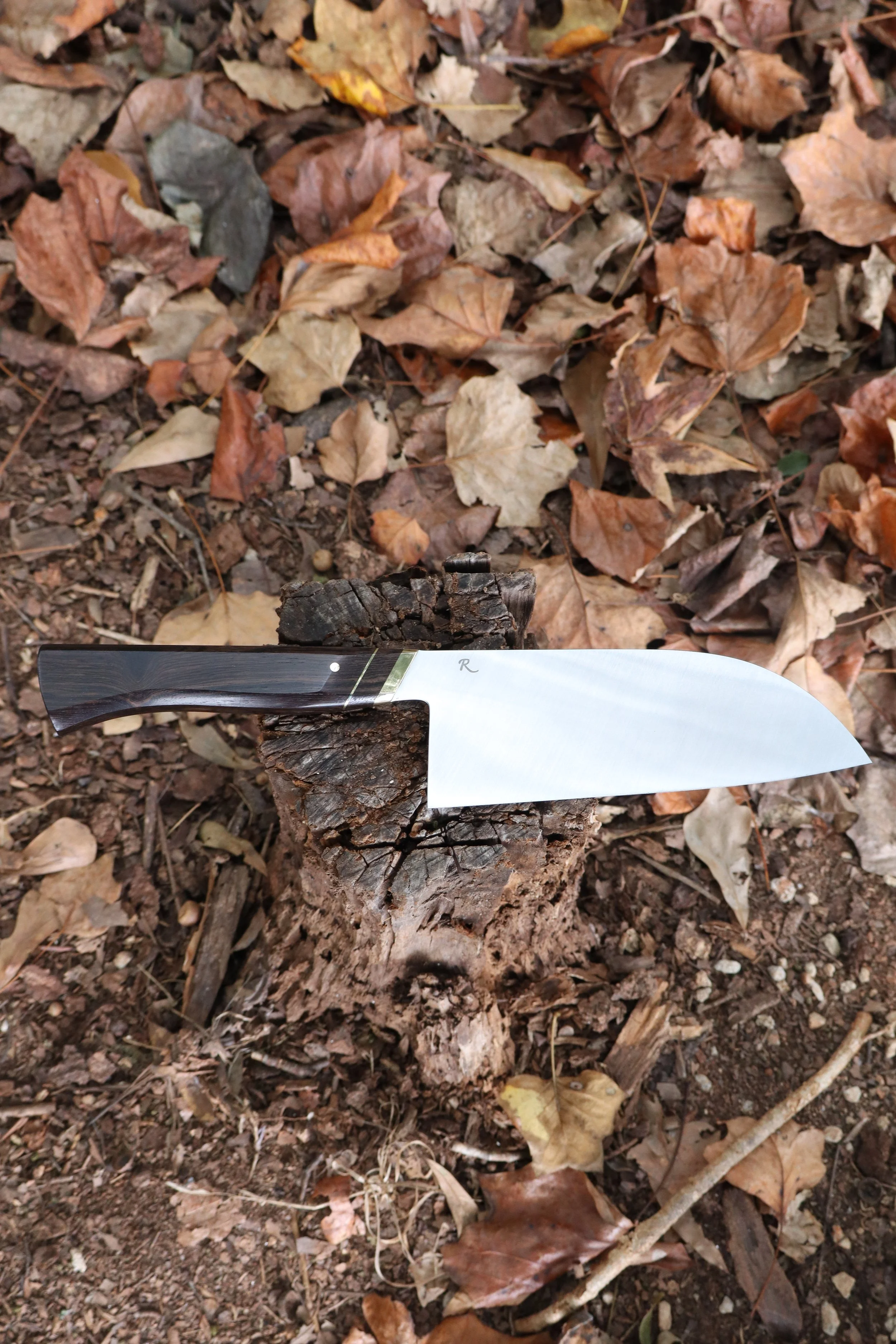 Image 1 of 6
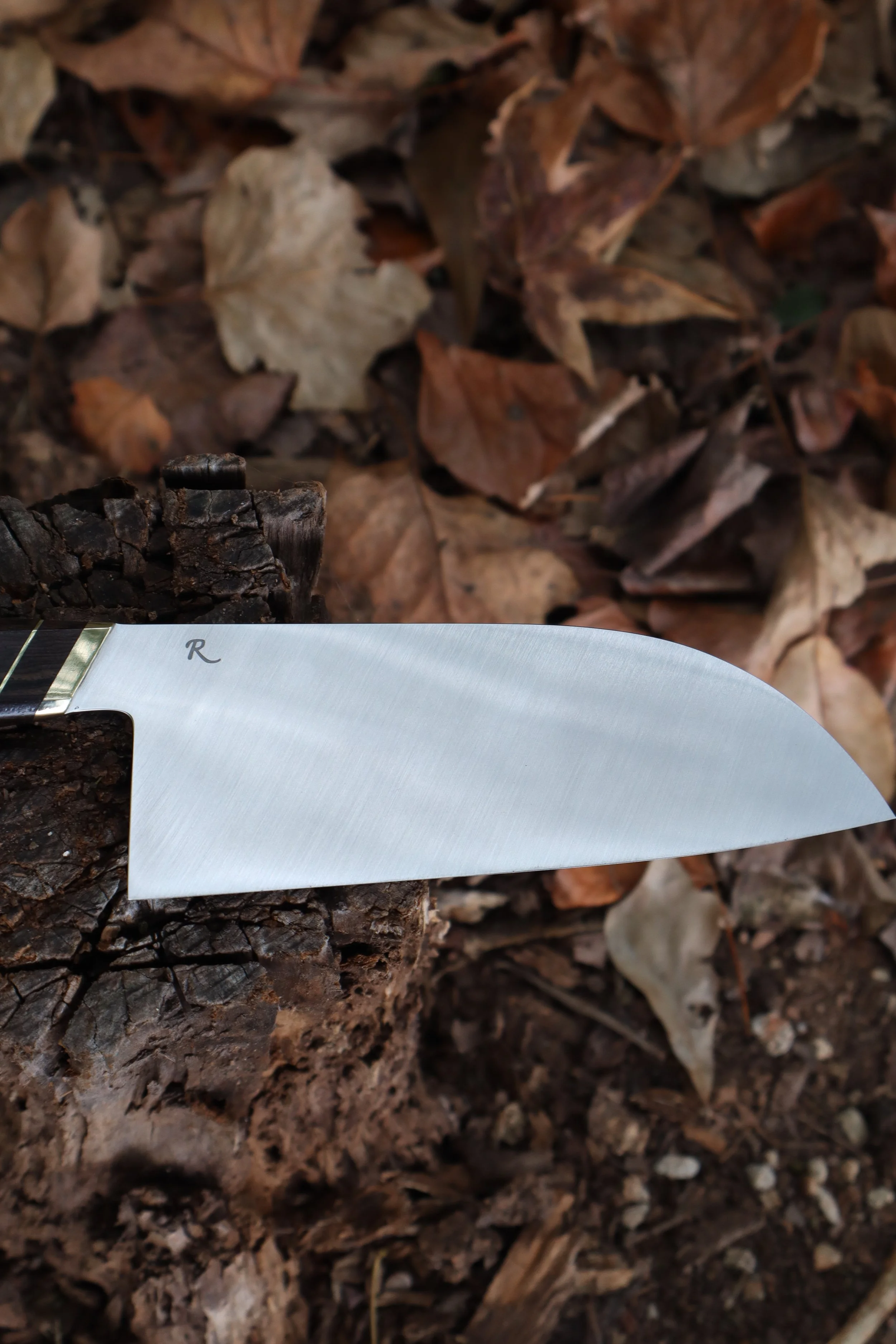 Image 2 of 6
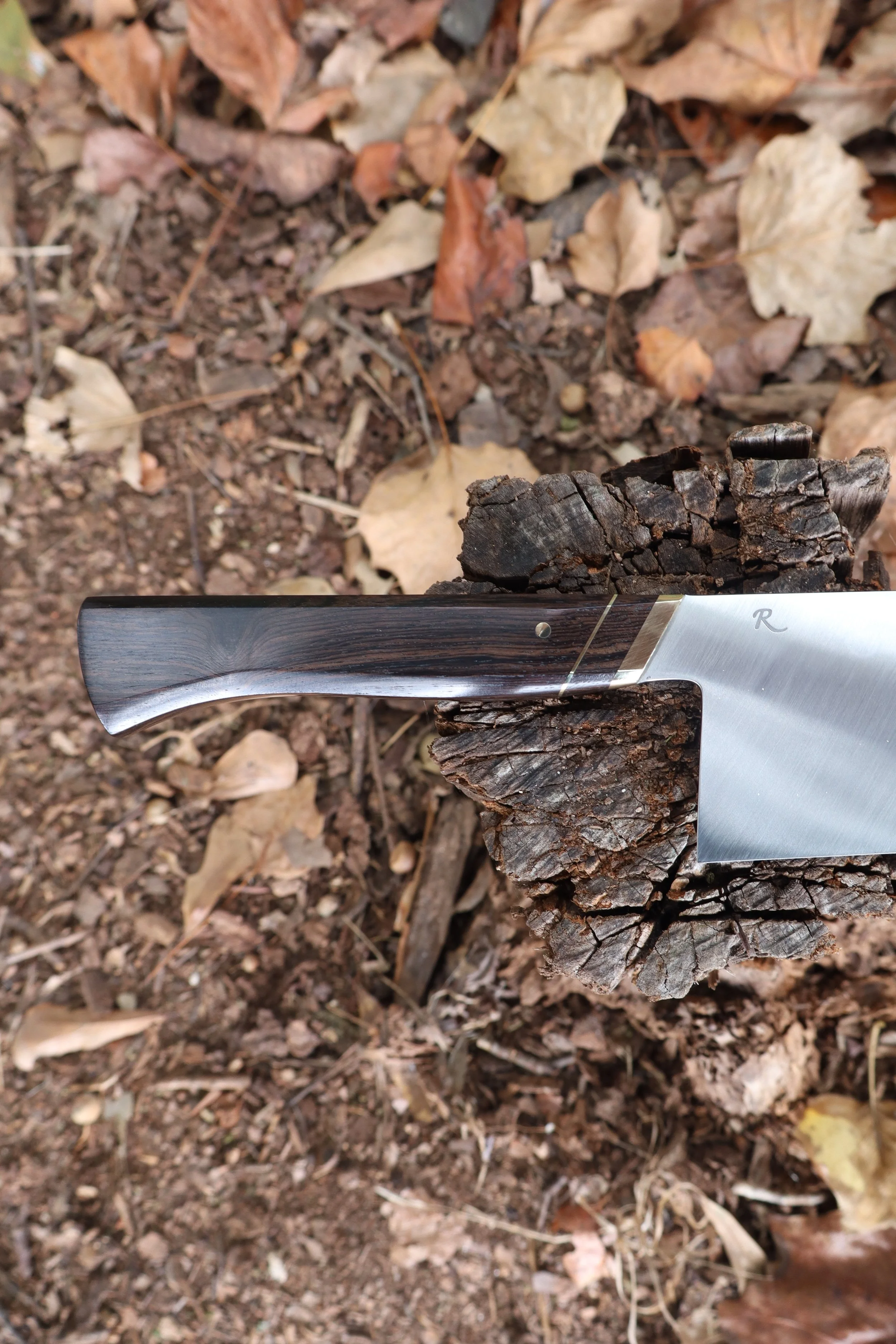 Image 3 of 6
 Image 4 of 6
 Image 5 of 6
 Image 6 of 6